Video games are an art form like no other. Because it takes many other forms of art such as visual art, story telling, sound design, animation and merges them into one spatial plane. These aspects are the basis of any game, but there is one more thing that is required for any game and that’s you, the player. What makes games so great is that you have direct interactability with the game world as you’re playing it. Also meaning that you have the utmost immersion compared to any other art-form.
And of course I do have a pristine example for this topic, of which said example is no other than a childhood classic, Maplestory. For those who are unfamiliar with this game, Maplestory is a game where you’re allowed to make your own character and venture out into the Maple World. As you go on about your journey within this world you will be met with vast amounts of areas to explore, music that is unique to each corresponding area, take quests from NPCs that will provide you some story or lore to the area you’re in, and you’ll also be using your skills to defeat any foe that stands in your way, all in order for you to level up and make your character grow stronger.
So how does this game relate to art and Tolstoy’s three requirements of infectiousness? Well to answer that, we have to go back to the afore mentioned aspects of a game. Take this image for example.
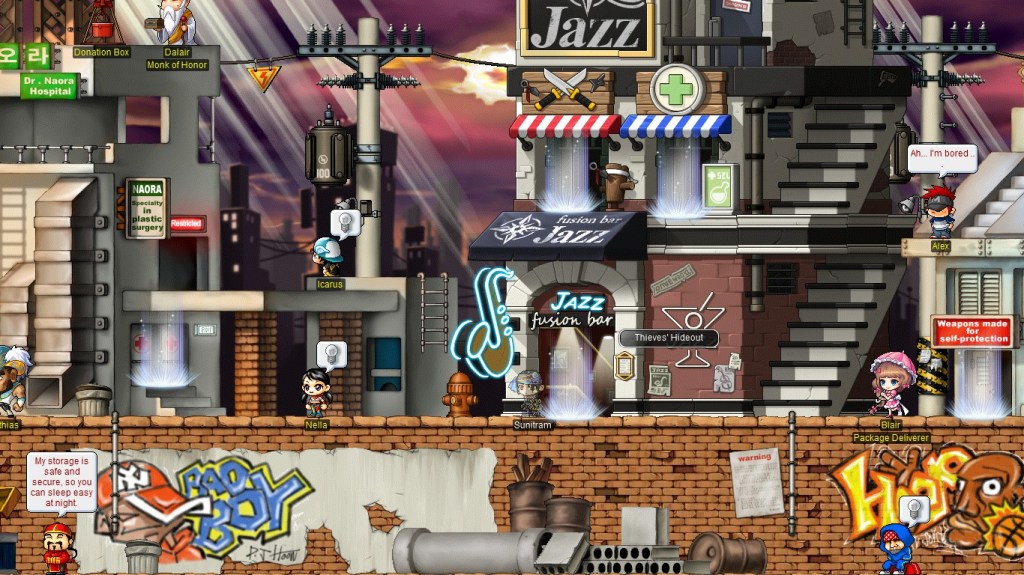
Looking at this image you can see the the clear intent of this map is to follow dangerous ghetto theme where crimes and thievery occur often. This is the drawn aspect that infects the player with some sense of the atmosphere in the area that they’re in. Here’s another example
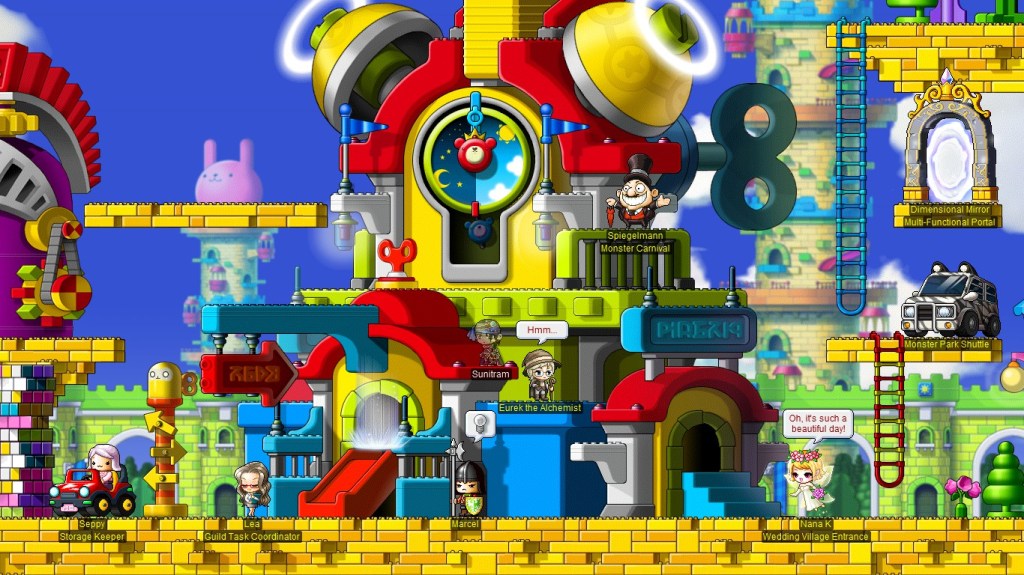
In this map we have such a surreal view a toy wonderland theme. A town completely made up of building block pieces with a mix of other children for toys and even some of the NPCs are figure toys as well. Again this ties to the visual aspect and shows its visual creativity to immerse the player in a different world/atmosphere.
Moving on to the second aspect, is the story telling. The below images is just a simple quest line.
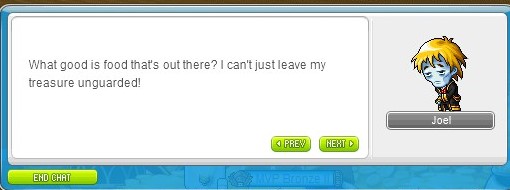

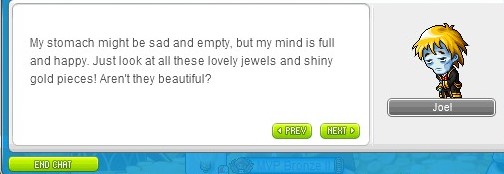
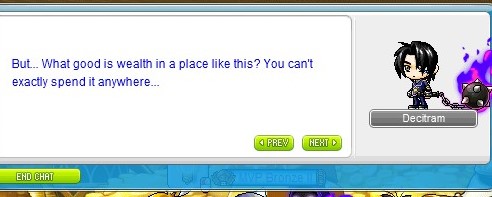
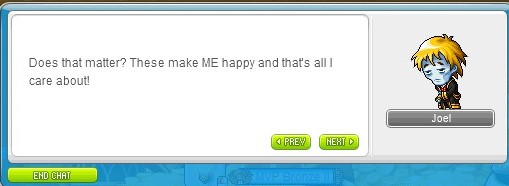
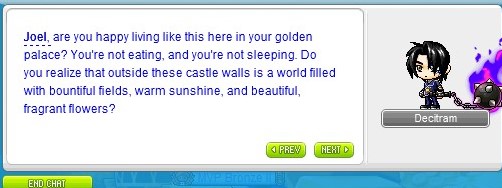
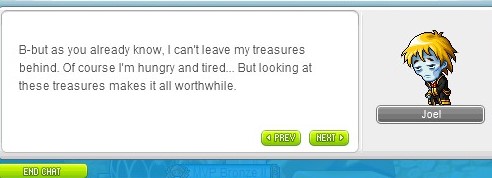
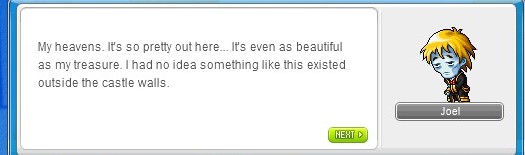
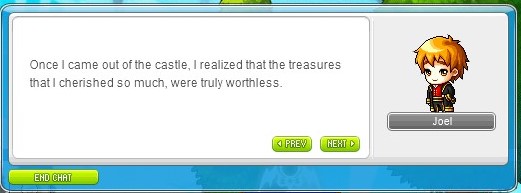
I know that this dialogue isn’t much. But I enjoy the aspect of your character being a part of the story and sometimes has meaningful life lessons for the player to interpret. The story of any game has to be compelling enough to further add the feel of the atmosphere to the player.
Onto the third aspect, sound design. You may have noticed that the text under each image is a hyperlink. Each link will send you to YouTube to enjoy the music of the corresponding area. What I would like to point out is that if you listen to the music and look at the provided images, you’ll likely find that the music fits with the theme of the area and adds more immersion to the atmosphere as you play.
Lastly, merging the aspects of animation and interactability into one. As mentioned before, your character travels and defeats monsters along the way. The attacking skills are generally well animated and add to the feel that your character is strong when you’re casting skills. For example,

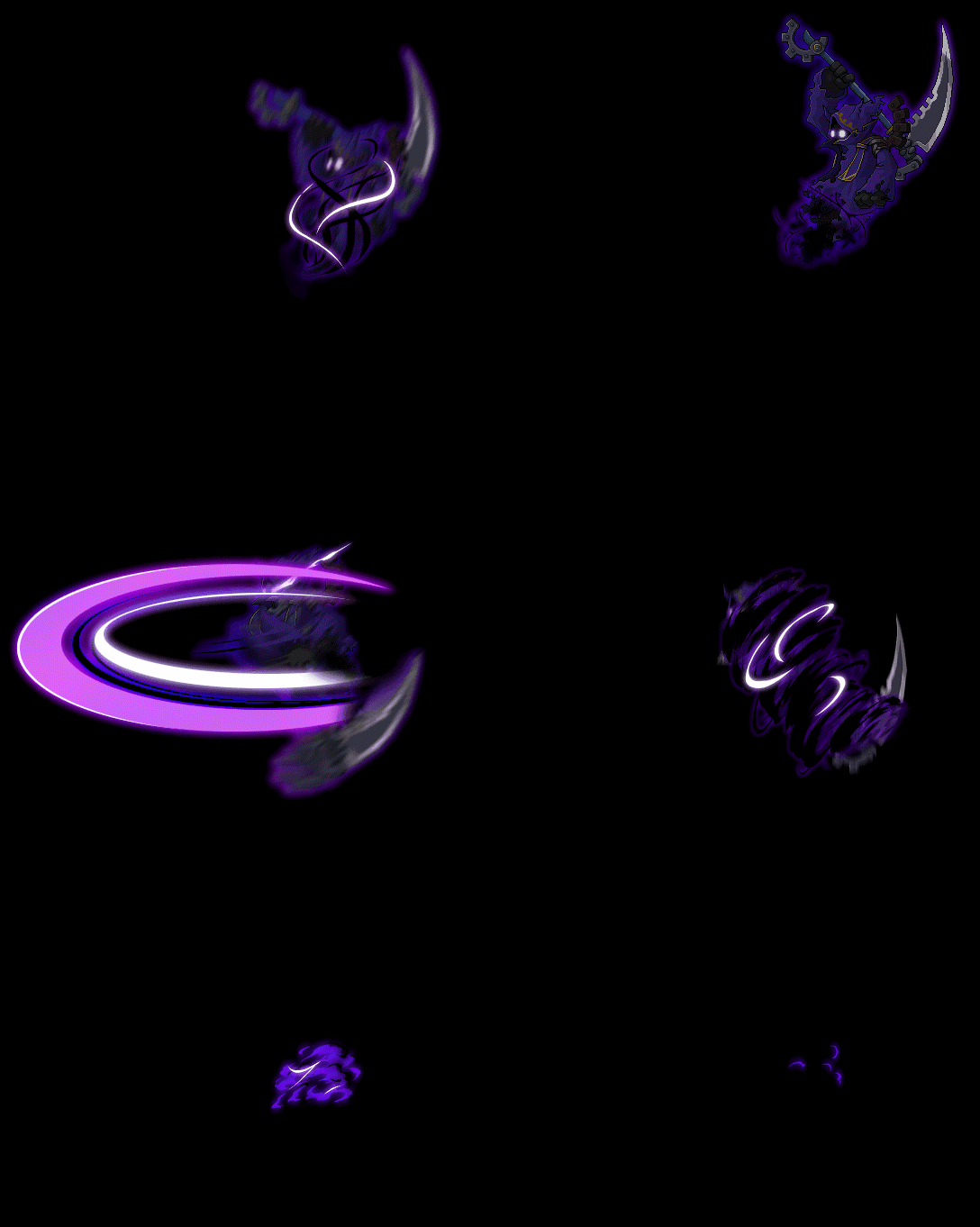
Though it doesn’t seem to be much on paper, but when put through an actual session the interactability you have as a player is extremely immersive. Knowing when to attack, observing the bosses, and maneuvering through obstacles to avoid death.
To put it back together, all of these aspects are what causes video games to be art. The visual appeal, auditory atmosphere, beautiful animations, and the technical skill of the player. It all infects the player with the sense/atmosphere of another world that the developer of the game had in mind.
Following Tolstoy’s requirements of art, video games easily fit all three of them. The individuality, the clarity of emitted emotion, and sincerity is present in many of today’s indie and triple A games. It’s all thanks to the fact that video games are culminations of already existing art forms with the key element of “interactability” added to the mix.
Just as Tolstoy writes, “The absence of any one of these conditions excludes a work form the category of art and relegates it to that of art’s counterfeits. If the work does not transmit the artist’s peculiarity of feeling and is therefore not individual, if it is unintelligibly expressed, or if it has not proceeded from the author’s inner need for expression – it is not a work of art. If all these conditions are present, even in the smallest degree, then the work, even if a weak one, is yet a work of art.”
Same as to what Tolstoy writes, if it doesn’t follow the three requirements, then it is not true art. The same can be said with games, if it misses any one aspect, then it is not a true game. A game with no sound will be bland. A game with no story will be boring, and so on.
Word Count: 864
 Nitram’s Blog
As someone who also really enjoys video games I knew there was work that went into them but this blog made me realize how much work goes into making them.
LikeLike
great job! I also have always been into video games and played many different games and its true seeing how much work and effort goes into making them.
LikeLike